
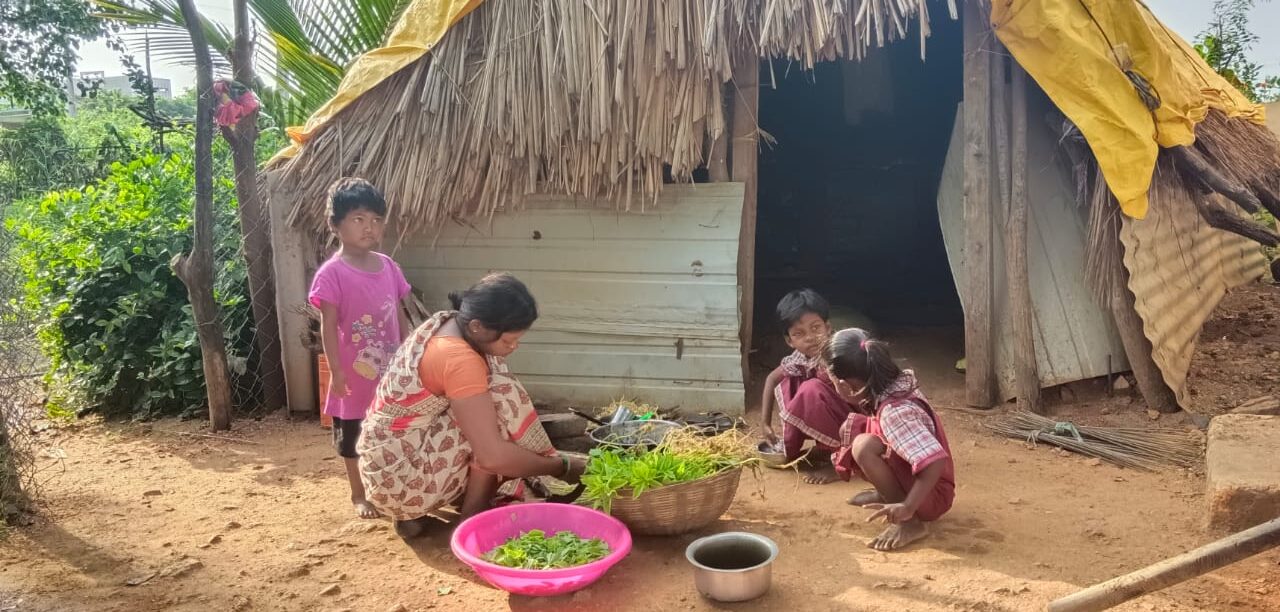
Improving Livelihoods of Tribal Communities in Bhadradri Kothagudem District
Supported by HDFC Bank and BRLF, this programme enhances the livelihoods of tribal communities through climate-resilient agriculture, integrated farming systems, agroforestry, irrigation development, nutrition gardens, women empowerment, and producer institutions.
Introduction
The Improving Livelihoods of Tribal Communities project is implemented by CONARE with the support of HDFC Bank CSR and Bharat Rural Livelihood Foundation (BRLF) in Bhadradri Kothagudem District, Telangana.
The programme focuses on strengthening tribal livelihoods through sustainable agriculture, natural resource management, climate-resilient farming, and community-based institutions. It promotes income generation while improving food security, nutrition, and environmental sustainability.
Program Details
The Improving of Livelihoods of Tribal in Bhadradri Kothagudem District is an initiative under Parivartaan Project, supported by HDFC and BRLF. This is a comprehensive initiative aimed at improving the lives and livelihoods of marginal farmers in Telangana. The project focuses on Integrated Natural Resource Management (INRM) and climate-resilient agricultural interventions. By combining sustainable farming practices with community-led models, the project has nurtured resilience against climate change while empowering farmers, particularly women, to lead socio-economic transformation. The key interventions and achievements of the project are:
Integrated Farming Systems: A cornerstone of the project has been the development of Integrated Farming System (IFS) models. These models combine crop cultivation, livestock, and horticulture into a single framework. By diversifying income streams, IFS reduces risks associated with mono-cropping and strengthens food security for marginal farmers. The holistic approach ensures that farmers can rely on multiple sources of livelihood, making them more resilient to climate and market fluctuations. A total of 250 farmers were benefited through the initiative.
Agro-Forestry and Soil Conservation: The project promoted agro-forestry and agro-horticulture
practices alongside soil and water conservation measures. These interventions restored ecological balance, improved soil fertility, and enhanced water retention capacity. As a result, sustainable agricultural landscapes were created that can withstand climate variability. A total of 180 Farmers benefited from healthier soils and more productive land, ensuring long-term sustainability
Irrigation Systems: To address water scarcity, diversion-based irrigation and micro-lift irrigation systems were introduced. These low-cost, community-managed solutions ensured equitable water distribution and improved crop productivity. By reducing dependency on erratic rainfall patterns, the irrigation systems provided 120 farmers with reliable access to water, enabling them to cultivate crops more consistently and profitably.
Climate-Resilient Crops and APC Clusters: The project encouraged the cultivation of climate-resilient crops and high-value vegetables through Agricultural Producer Cluster (APC) models. This approach enhanced 200 farmers’ adaptive capacity while creating market-oriented production systems. By focusing on profitability and resilience, farmers reduced vulnerability to climate shocks and improved their economic stability.
Nutrition and Livelihood Diversification: To improve household nutrition, backyard nutri gardens, poultry units, and small ruminant shelters were established. These interventions diversified livelihoods and provided protein-rich food sources. 300 Families benefited from improved nutrition and additional income opportunities, strengthening household resilience against both economic and nutritional insecurities.
Community Seed Banks and Bio-Resource Centres: Community seed banks and bio-resource centres were established to ensure access to indigenous, climate-resilient seeds and bio-inputs. These centres became hubs of knowledge-sharing and resource management. 150 Farmers were empowered to adopt sustainable practices, reduce reliance on external inputs, and preserve traditional seed varieties that are better adapted to local conditions
Women’s Leadership in Agriculture: A total of 140 women-led producer groups were nurtured under the project. These groups positioned women as leaders in agricultural development, enhancing collective bargaining power and creating platforms for active participation in decision-making, financial management, and market linkages. Women’s leadership became a driving force for inclusive rural development.
Training Ecopreneurs in Green Trades: The project trained 140 ecopreneurs in sustainable and eco-friendly trades. These individuals became catalysts for promoting green livelihoods, introducing innovative practices, and ensuring that communities could generate income while protecting natural resources. Their role was crucial in spreading awareness and embedding sustainability into everyday practices.
Climate Resilience and Sustainable Practices: Through interventions such as integrated farming systems, agro-forestry, irrigation solutions, and climate-resilient crops, farmers significantly enhanced their resilience against climate change. Diversified, eco-friendly practices reduced risks from erratic rainfall and market fluctuations, ensuring long-term sustainability. Communities became better equipped to adapt to changing environmental conditions. More than 1000 farmers and households benefited.